Inquiry
Form loading...

Why Choose Nail Free Adhesive for Global Buyers?

For global buyers, Nail Free Adhesive offers a practical alternative to mechanical fasteners in many interior and light-duty construction projects. It can help reduce drilling, surface damage, installation noise, and visible fixing points. A clean finish matters.

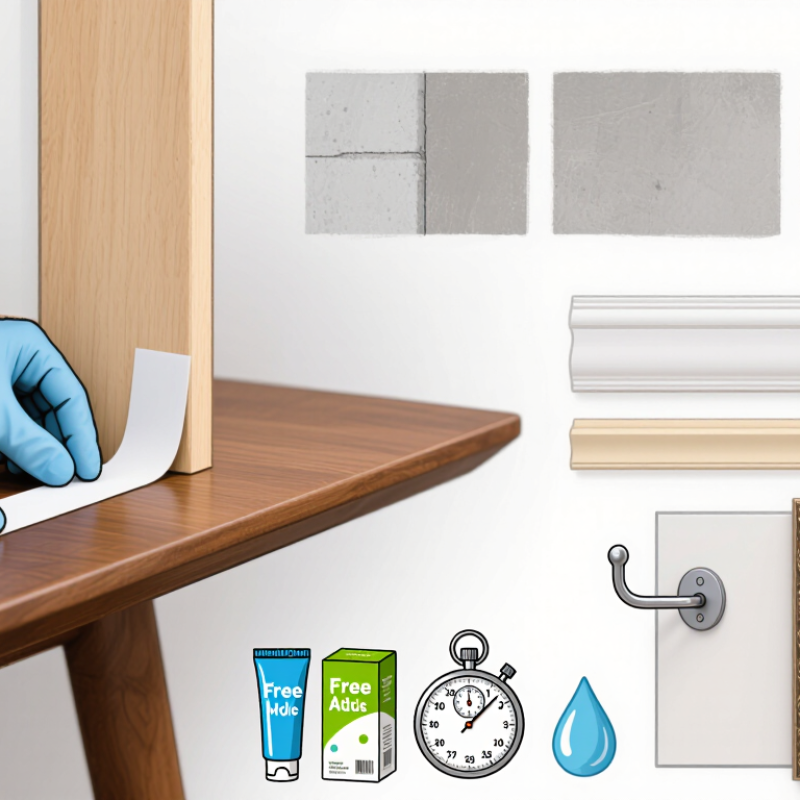
In real applications, buyers may use Nail Free Adhesive for trim, panels, skirting boards, hooks, and decorative pieces. Performance depends on the substrate, load, temperature, moisture, and curing time. Concrete, wood, painted walls, and plastics may require different preparation. Dust and grease can weaken the bond. Small details matter.

Experienced purchasing teams should review technical data before placing large orders. Important points include open time, curing speed, shear strength, service temperature, packaging stability, and shelf life. Ask suppliers for test reports, safety data, batch information, and clear application instructions. Regional labeling and chemical requirements also deserve careful checking. A professional supplier should explain limitations, not only promote strength.

Nail Free Adhesive is not perfect. It cannot replace every fastener or support every heavy load. Some surfaces need primers, temporary support, or mechanical reinforcement. Buyers should test samples under realistic conditions, including heat, humidity, vibration, and storage changes. That step may seem slow.

It prevents expensive surprises.

Reliable sourcing also depends on consistent production, traceable quality control, responsive communication, and suitable packaging for international transport. When buyers compare products through evidence rather than price alone, Nail Free Adhesive can become a dependable choice for cleaner, faster, and more flexible installation work.
Why Choose Nail Free Adhesive for Global Buyers?

What Is Nail-Free Adhesive? MS Polymer, Acrylic, and PU Systems

Why Choose Nail-Free Adhesive for Global Buyers?

Nail-free adhesive replaces mechanical fasteners in many interior and light-duty construction tasks. It bonds panels, trim, hooks, and decorative elements without drilling visible holes. However, “nail-free” does not mean suitable for every surface or load. Product performance depends on the adhesive chemistry, substrate, temperature, and curing conditions.

MS polymer systems cure with moisture and usually provide strong adhesion with useful flexibility. They resist movement and weather changes, making them suitable for mixed materials and some outdoor applications. Acrylic systems often offer quick grab and easy handling, especially on clean indoor surfaces. Their flexibility and moisture resistance can vary significantly. PU systems can deliver strong, durable bonds and tolerate movement, but they may require careful moisture control and safe handling before curing. There is no universal winner. In field testing, buyers sometimes overvalue initial grab and underestimate full curing time.

Tips: Check the technical data sheet, safety data sheet, and local compliance requirements before purchase. Test a small area first. Clean dust, oil, and loose paint from the surface. Apply enough adhesive for contact, but avoid thick, trapped layers. Support heavy items during curing. Review temperature limits, storage conditions, packaging stability, and shelf life for international transport. Ask for batch traceability and independent test results when reliability matters. A stronger bond is not always the better choice. Surface damage can occur during removal.
Why Choose Nail-Free Adhesive for Global Buyers?

What Is Nail-Free Adhesive? MS Polymer, Acrylic, and PU Systems

Density is a practical logistics and formulation indicator for global buyers. Representative technical-data-sheet ranges are approximately 1.4–1.6 g/cm³ for MS polymer adhesives, 1.0–1.3 g/cm³ for acrylic adhesives, and 1.1–1.3 g/cm³ for polyurethane adhesives. Actual values vary according to fillers, additives, moisture content, and formulation design. MS polymer systems generally cure with atmospheric moisture, acrylic systems are available in water-based, solvent-based, and reactive formats, while PU systems commonly cure through moisture or a two-component reaction.

How Strong Is It? ASTM D1002 Lap-Shear Results in MPa

Global buyers often ask one practical question: how strong is nail-free adhesive? ASTM D1002 offers a useful answer.

It measures single-lap shear strength in megapascals, or MPa. The test usually uses controlled overlap, aligned substrates, and a defined pulling speed.

A simple calculation makes the number tangible. A 1,000-newton failure load over 322.6 square millimetres equals about 3.1 MPa.

That figure describes shear resistance, not universal holding power. ASTM D1002-19 also warns that results depend on substrate, surface preparation, bondline, curing, and test conditions. A clean steel panel may behave differently from painted drywall.

Read the test sheet carefully. Look for sample size, cure temperature, humidity, and failure mode. Cohesive failure means the adhesive tears internally. Adhesive failure means it separates from the surface.

The Adhesive and Sealant Council identifies surface preparation and environmental exposure as major performance variables in technical guidance. Market research from Fortune Business Insights valued the global construction adhesives market at approximately USD 10.17 billion in 2023. That growth increases demand for comparable testing, not vague strength claims.

Still, one concern remains. A laboratory MPa result cannot fully copy a wet bathroom wall or a dusty renovation site. Global buyers should request multiple specimens, aging data, and substrate-specific results before approving a product.

How Fast Does It Cure? 24–48-Hour Strength and Temperature Ratings

Why Choose Nail Free Adhesive for Global Buyers?

Nail-free adhesive suits buyers seeking cleaner installation without drilling, dust, or visible fasteners. Cure speed matters more than marketing claims. Most hybrid polymer and construction adhesive systems develop usable strength within 24–48 hours at approximately 20–25°C and 50% relative humidity. The Adhesive and Sealant Council’s 2024 industry outlook links demand growth with faster renovation and maintenance work, where shorter installation downtime has practical value.

Temperature changes can slow or distort curing. Below 10°C, moisture-curing products may need longer than 48 hours. High humidity can help some formulas cure, but excessive moisture may weaken the bond surface. Many technical datasheets list service ranges near -20°C to 80°C, while continuous heat exposure requires separate testing. ASTM C920 and ISO 11600 offer useful performance frameworks, but neither guarantees identical curing results for every adhesive.

Test before scaling.

A 2023 Grand View Research market report valued the global adhesives and sealants market at roughly USD 76 billion, showing why consistent international specifications matter. Buyers should request shear-strength data, temperature ratings, substrate compatibility, and curing tests at 24 and 48 hours. I would not trust a single “instant grab” statement. Dust, porosity, pressure, and uneven surfaces can change the result more than expected. Temperature ratings are not cure-time promises. They describe performance after curing.

Why Choose Nail Free Adhesive for Global Buyers? - How Fast Does It Cure? 24–48-Hour Strength and Temperature Ratings

Evaluation Dimension Typical Data or Rating What It Means for Buyers Recommended Practice Key Limitations Global Purchasing Consideration
Initial Grab Usually develops within approximately 10–30 minutes, depending on the formulation, surface, and load. The item may remain in position shortly after installation, but this does not represent full curing. Support, brace, or tape the object during the early curing stage. Heavy, porous, dusty, or uneven surfaces generally require longer support. Ask for the product-specific open time and initial-grab test method before comparing suppliers.
Handling Strength Commonly reached after about 24 hours under standard indoor conditions of approximately 20–25°C and 40–65% relative humidity. Light handling may be possible after one day when the joint has been correctly prepared. Keep the bond undisturbed and avoid shock loads for the first 24 hours. Cold temperatures, low humidity, thick adhesive beads, and non-porous materials can slow curing. Request a technical data sheet that defines the stated 24-hour strength conditions.
Full Cure and Maximum Strength Often develops within 24–48 hours; some high-build or moisture-curing products may require longer. Maximum performance should not be assumed immediately after installation. Wait at least 48 hours before applying the rated load unless the manufacturer specifies otherwise. Full cure depends on adhesive chemistry, bead thickness, air or moisture access, and substrate porosity. Compare cure-time data using the same bead size, temperature, humidity, and test load.
Application Temperature Many construction adhesive products are applied around 5–35°C; the exact range varies by formulation. Application outside the stated range can reduce workability and bonding reliability. Condition the adhesive and substrates to the recommended temperature before use. Freezing conditions and very hot surfaces may prevent proper wetting or curing. For international shipments, confirm storage and application limits for the destination climate.
Service Temperature Typical general-purpose formulations may support approximately -20°C to 80°C after full cure; specialized products may differ. The bond can tolerate normal indoor and moderate outdoor temperature changes when correctly selected. Select a product whose published service range exceeds the expected operating temperature. Continuous heat, thermal cycling, and direct sunlight can reduce long-term performance. Request test data for the intended climate zone and end-use environment.
Surface Compatibility Commonly suitable for materials such as wood, concrete, masonry, ceramic, metal, and some plastics. One adhesive can support multiple installation applications, reducing the need for mechanical fasteners. Clean, dry, sound, and grease-free surfaces; lightly abrade smooth surfaces when permitted. Polyethylene, polypropylene, silicone, waxed surfaces, and heavily plasticized materials may bond poorly without special treatment. Require a substrate compatibility list and sample testing for every critical material combination.
Moisture and Water Exposure Water resistance varies from limited resistance to weather-resistant performance after full cure. The product may be appropriate for damp areas only when its cured water-resistance rating supports the application. Protect the uncured joint from rain, washing, condensation, and standing water. Water-resistant does not necessarily mean suitable for permanent immersion. Check the relevant water-resistance classification, test standard, and intended-use statement.
Load and Bond Design Performance depends on bond area, substrate strength, load direction, and curing conditions rather than adhesive alone. A larger, well-prepared bonding area generally distributes load more effectively than a small point bond. Use continuous beads or suitable coverage according to the product instructions and support heavy items mechanically when required. Peel, impact, vibration, and sustained loads can be more demanding than simple shear loads. Ask for lap-shear, tensile, or peel data that matches the planned application.
Packaging and Shelf Life Cartridges, tubes, and foil packs commonly have a shelf life of approximately 12–24 months when unopened and stored correctly. Longer shelf life can reduce waste during international distribution and warehouse storage. Store sealed packages in a cool, dry location and follow the printed expiry date. Heat, freezing, moisture ingress, and damaged seals can shorten usable life. Confirm batch date, expiry date, packaging integrity, and storage requirements before shipment.
Safety and Compliance Safety classification, VOC content, odor, and transport requirements vary by formulation and jurisdiction. Compliance documentation helps importers evaluate workplace, indoor-air, and logistics requirements. Review the Safety Data Sheet, technical data sheet, label, and local regulatory requirements. “Nail free” describes the installation method and does not automatically indicate a low-emission or non-hazardous product. Request current SDS, product labeling, VOC information, and applicable conformity documents.
Note: Cure times and temperature ratings are typical industry ranges for general construction adhesives, not universal guarantees. Always follow the selected product’s technical data sheet, conduct a small compatibility test, and verify the required load, environmental exposure, and local regulations before commercial use.

How Safe Is It? VOC Limits, SDS Data, and EU REACH Compliance

Why Choose Nail Free Adhesive for Global Buyers?

Nail-free adhesive can simplify installation and reduce drilling noise, dust, and surface damage. However, “safe” depends on the formula, exposure, and application conditions. A low-odor product is not automatically low-VOC. Global buyers should request laboratory test results, not rely on marketing language. Check the reported VOC method, test date, and applicable regional limit. Requirements may differ between the EU, North America, and other markets.

The Safety Data Sheet is essential. Review Sections 2 and 3 for hazards and ingredients. Section 8 should explain ventilation, gloves, and eye protection. Sections 9 and 11 provide useful physical and health information. Storage, transport, and disposal details also matter. Keep the latest SDS with each shipment. An old revision can create avoidable compliance problems. Small details matter.

EU REACH compliance requires careful verification. REACH covers chemical registration, restrictions, and substances of very high concern. It does not mean every finished adhesive is automatically certified. Ask the supplier for a current REACH statement, SVHC communication, and supporting test documents. For practical evaluation, apply the adhesive in a ventilated room and observe odor, curing time, bond strength, and surface compatibility. I have seen products perform well on dry wood but fail on dusty painted walls. That limitation should be recorded honestly. Safety claims deserve evidence, and evidence should match the actual product batch.

How Should Global Buyers Screen Suppliers? EN 14293, ISO 9001, and Traceability

Why Choose Nail Free Adhesive for Global Buyers?

Nail-free adhesive can simplify installation, reduce visible damage, and support cleaner finished surfaces. Its value depends on controlled formulation, correct surface preparation, and stable curing performance. Global buyers should screen suppliers through evidence, not attractive samples alone.

EN 14293 matters when the adhesive is intended for bonding wood flooring to suitable substrates. Ask whether the test report matches the exact product, application, and performance claim. A general certificate may not prove suitability for every floor or climate. Check open time, shear strength, flexibility, moisture limits, and curing behavior. Ask for recent reports from competent laboratories. Test the batch.

ISO 9001 shows that a supplier operates a quality management system. It does not automatically certify adhesive performance. Review the certificate scope, issuing body, validity, and manufacturing site. Then inspect traceability. Each cartridge or pail should connect to a lot number, production date, raw material records, laboratory results, and retained samples. A clear complaint process is equally important. Request a small trial order and compare viscosity, bead stability, curing time, and bond strength under local conditions. Humidity can expose weaknesses quickly. Supplier screening is never perfect. Documents may be complete while production consistency still varies. Independent verification and repeated sampling reduce that risk.