Inquiry
Form loading...
Subfloor Adhesive quietly determines whether a flooring project feels solid or fails beneath the surface. It bonds plywood, concrete, engineered wood, resilient flooring, and other layers under demanding conditions. Buyers therefore need more than a familiar brand name. They need evidence about bond strength, moisture tolerance, open time, installation safety, technical support, and regional availability.
Industry data shows why this category deserves closer attention. Grand View Research estimates that the global construction adhesives market will continue expanding through the decade, driven by residential renovation, commercial construction, and lightweight building systems. MarketsandMarkets also identifies flooring and building applications as important demand areas within the broader adhesives industry. These reports differ in market boundaries and forecasting methods. That limitation matters. A single headline number cannot explain supplier reliability.
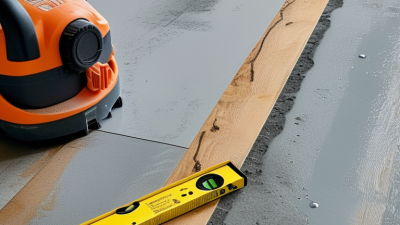
Brett Miller, an acknowledged flooring technical expert and former NWFA vice president, has repeatedly stressed that “the subfloor is the foundation of the flooring system.” His practical message is simple: moisture testing, surface preparation, and product compatibility must come before application. Details matter. A clean concrete slab, a calibrated moisture meter, and a properly notched trowel can change the result.
This guide reviews ten Subfloor Adhesive suppliers for global buyers. It considers product performance, certifications, packaging, technical documentation, distribution reach, and after-sales support. Some suppliers appear impressive on paper but offer limited local assistance. Others may have stronger field experience than marketing visibility. That distinction is easy to miss. The ranking should therefore be treated as a purchasing framework, not an absolute verdict.
Global subfloor adhesive demand is rising with renovation activity, modular construction, and stricter indoor-air standards. Most research firms classify subfloor products within the broader flooring adhesives market. Grand View Research estimates this market reached approximately USD 11 billion in 2024, with growth near 5% annually through 2030. Another 2024 assessment from Mordor Intelligence places the market on a similar expansion path, supported by residential repair and commercial flooring projects.
Demand is practical and regional. Buyers in humid climates often require moisture-resistant formulations, while cold regions need adhesives that remain flexible during temperature changes. Water-based products are gaining attention because they can reduce odor and simplify indoor installation. Still, performance varies by concrete moisture, wood movement, and curing time. Testing matters.
For a top-ten supplier review, global buyers should compare technical data sheets, batch consistency, packaging strength, and local technical support. Certification claims require verification, not assumptions. A supplier may offer a low purchase price but create higher labor costs through slow curing or difficult cleanup. Field experience suggests that substrate preparation often affects results more than product price. That point is easy to overlook. The market forecast also deserves caution, because public reports use different product boundaries, currencies, and regional assumptions. Grand View Research and Mordor Intelligence provide useful direction, but procurement teams should validate demand with project-level data before signing long-term contracts.
Anonymous supplier profiles ranked by global product coverage, technical range, and distribution reach
| Rank | Supplier Profile | Primary Supply Region | Common Adhesive Chemistry | Typical Subfloor Applications | Common Packaging | Relevant Technical Requirements | Global Availability |
|---|---|---|---|---|---|---|---|
| 1 | Multinational Construction-Chemicals Supplier | North America, Europe, Asia-Pacific | Modified silane polymer; polyurethane | Engineered wood, solid wood, bamboo, plywood, and resilient-flooring installations | 600 ml sausages; 290–310 ml cartridges; 15–20 kg pails | Low-emission formulations; moisture tolerance; ASTM D3498 or equivalent wood-adhesive performance where applicable | High; local distributors in multiple continents |
| 2 | Regional Flooring-Systems Manufacturer | Europe and the Middle East | MS polymer; two-component polyurethane | Parquet, engineered timber, underfloor-heating systems, and moisture-sensitive wood floors | 7–15 kg pails; dual-component kits | ISO 17178 classification for parquet adhesives; low VOC or very-low-emission labeling in applicable markets | High in Europe; selective export coverage |
| 3 | Industrial Polyurethane Adhesive Producer | North America and Asia-Pacific | Moisture-curing polyurethane; reactive polyurethane | Plywood-to-concrete bonding, wood subfloor assembly, stair components, and heavy-duty renovation | 310 ml cartridges; 600 ml sausages; 5–20 kg containers | Water resistance, gap filling, substrate compatibility, and documented cure performance | Medium to high; strong project-based supply |
| 4 | Water-Based Flooring Adhesive Supplier | North America, Europe, and Australia | Acrylic or vinyl-acrylic dispersion | Cork, carpet tile, sheet flooring, resilient flooring, and porous wood-based substrates | 4–20 kg pails; bulk drums for commercial projects | Low VOC requirements; open time; shear strength; compatibility with absorbent subfloors | High in mature flooring markets |
| 5 | Hybrid Flooring-Adhesive Specialist | Europe and Southeast Asia | Silane-terminated polymer; hybrid polymer | Floating-floor edge bonding, full-surface wood-floor bonding, and mixed-substrate renovation | 600 ml sausages; 15 kg pails; 18–20 kg buckets | Elastic bonding, dimensional-movement accommodation, low odor, and moisture resistance | Medium to high; distributor-led exports |
| 6 | Commercial Flooring Installation Supplier | North America | Pressure-sensitive acrylic; polyurethane; epoxy moisture barrier systems | Commercial sheet vinyl, LVT, rubber flooring, carpet, and concrete subfloor preparation | 3.8–18.9 litre pails; two-part kits | ASTM flooring-test methods where specified; moisture-vapor mitigation; indoor-air-quality requirements | High in North America; moderate international supply |
| 7 | Wood-Floor Adhesive Exporter | East Asia and Southeast Asia | One-component polyurethane; modified silane polymer | Engineered flooring, laminated timber panels, parquet, and residential refurbishment | 600 ml sausages; 10–20 kg pails; private-label bulk formats | Moisture tolerance, elastic cure, formaldehyde and VOC documentation, and export labeling | Medium; strong OEM and private-label capability |
| 8 | Epoxy and Moisture-Control Systems Supplier | Europe, North America, and the Gulf region | Two-component epoxy; epoxy-polyurethane systems | High-moisture concrete, industrial floors, heavy-use facilities, and substrate consolidation | 5–25 kg kits; industrial drums | Concrete moisture testing, bond strength, chemical resistance, and controlled mix ratios | Medium; primarily project and specification driven |
| 9 | Private-Label Adhesive Manufacturer | China, India, and Southeast Asia | Acrylic dispersion; polyurethane; silane hybrid | Residential flooring, modular construction, OEM flooring systems, and distributor brands | Cartridges, sausages, pails, and export drums | Buyer-specific VOC, packaging, shelf-life, technical-data-sheet, and labeling requirements | High for container-load and OEM orders |
| 10 | Regional Building-Materials Distributor | Latin America, Africa, and the Middle East | Solvent-free acrylic; polyurethane; cement-compatible hybrid systems | Residential renovation, plywood, ceramic-transition areas, timber, and resilient flooring | 1–20 kg pails; cartridges; contractor-size kits | Local VOC rules, substrate preparation guidance, shelf-life control, and technical support | Medium; dependent on national distribution networks |
Global subfloor adhesive market snapshot
| 2024 Market Value | Subfloor adhesive is not consistently reported as a standalone global statistical category. Public market studies generally combine it with flooring adhesives, wood-floor adhesives, or construction adhesives; therefore, published 2024 values are not directly comparable. |
|---|---|
| 2024 Demand Pattern | Demand is supported by residential renovation, engineered-wood flooring, commercial flooring replacement, modular construction, and the installation of flooring over concrete substrates. |
| Fastest-Growing Product Segments | Low-emission water-based adhesives, one-component polyurethane systems, and silane-modified polymer adhesives are gaining attention because of indoor-air-quality requirements, elastic bonding performance, and simplified installation. |
| Leading Demand Regions | North America and Europe remain mature specification-driven markets, while Asia-Pacific represents a major volume and construction-growth region. Latin America, the Middle East, and Africa are primarily distributor- and project-driven markets. |
| 2030 CAGR | No single independently verifiable CAGR is available for the narrowly defined subfloor adhesive category. CAGR figures published for broader flooring-adhesive and construction-adhesive markets should not be presented as a direct subfloor-adhesive CAGR without adjusting the market scope. |
| Key Buyer Evaluation Criteria | Bond strength, substrate moisture tolerance, open time, cure speed, movement accommodation, VOC emissions, packaging format, shelf life, technical documentation, local compliance, and distributor availability. |