Why Choose No More Nails Adhesive for Global Sourcing?
Global buyers are rethinking how materials are joined, transported, and installed. No More Nails Adhesive responds to this shift with strong bonding, convenient application, and reduced reliance on mechanical fasteners. Grand View Research valued the global adhesives and sealants market at approximately USD 76.2 billion in 2023. It also projects steady growth through 2030. Construction remains a major demand driver.
That growth matters to sourcing teams. They need consistent quality across different climates, packaging formats, and building practices. A cartridge sitting in a humid warehouse must still perform reliably. A contractor should apply it smoothly, without unnecessary drilling, dust, or noise. These practical details influence total project cost.
Henkel’s Adhesive Technologies leader Jan-Dirk Aurich has emphasized, “Adhesive performance must be judged in the application, not on the shelf.” This principle suits No More Nails Adhesive. Product selection should consider substrate compatibility, curing conditions, load requirements, and local standards. A low purchase price is not enough.
MarketsandMarkets estimates that the construction adhesives market will grow from about USD 11.3 billion in 2024 to USD 14.9 billion by 2029. The opportunity is clear, but sourcing decisions still require caution. Product names can create confidence too quickly. Technical datasheets, batch consistency, and regional compliance documents deserve equal attention.
No adhesive solves every problem. That is the uncomfortable part. Yet, when evaluated through testing and real installation experience, No More Nails Adhesive can offer global buyers a practical balance between speed, strength, and sourcing efficiency.

Why Choose No More Nails Adhesive for Global Sourcing?
What Is No More Nails Adhesive?
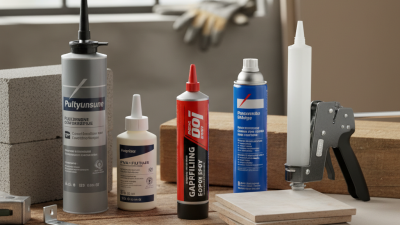
“No More Nails” describes a category of construction adhesive designed to bond building materials without relying only on screws or nails. It is commonly supplied in cartridges for a caulking gun. Depending on the formulation, it may bond wood, plasterboard, masonry, or some plastics. Formulas differ. Always check the product’s technical data sheet for approved surfaces, application conditions, and cure time.
This is not a universal replacement for mechanical fixings. Heavy, overhead, or safety-critical assemblies may need additional support. Dusty surfaces, damp conditions, and poor contact can also weaken a bond. Details matter. For global sourcing, buyers should compare the stated substrate range, open time, curing conditions, storage life, and test methods—not just the “high strength” label.
The market context is substantial: Grand View Research’s Adhesives and Sealants Market Size report valued the global market at USD 75.4 billion in 2023 and projected 4.3% annual growth from 2024 to 2030. That figure covers many adhesive types, not this category alone. Ask suppliers for current technical and safety data sheets, and verify that test results match the intended materials and job conditions. Sometimes a small test bond on the actual surface is the most useful check.
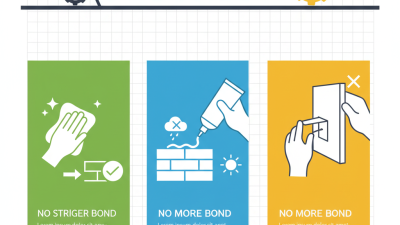
What is it? No More Nails adhesive is a general term for construction adhesives used to bond building and finishing materials without conventional nails. Formulations differ, so always confirm suitability for the specific materials and conditions.
Each bar represents one essential check to verify with the supplier—not a market statistic or a claim that every formulation is suitable for every use. Review substrate compatibility, application conditions, cure time and load limits, safety documentation and applicable VOC requirements, plus packaging and shelf life.
No More Nails adhesive creates a bond between materials without conventional nails or screws. Its formulation varies, but many construction adhesives use polymers or resins to grip surfaces and harden as they cure. The adhesive bead fills small gaps and helps spread stress across the contact area. It is not instant.
For a strong bond, surfaces should be clean, dry, and free of dust or loose paint. Press the pieces together as directed, then support heavier items while the adhesive cures. Initial grip can feel firm, but full strength may take longer. Check the product instructions for compatible materials, application thickness, ventilation, and curing time. I’ve found that rushing this stage is an easy mistake, especially when a panel seems secure after a few minutes.
Tips: Apply an even bead rather than isolated blobs. Test on a hidden area if the surface is delicate. Keep the joint still during curing, and do not assume every formula suits damp, flexible, or load-bearing applications. When uncertain, check the technical guidance.
High-grab construction adhesive supports many common building materials. It can bond wood, MDF, plywood, plasterboard, brick, concrete, ceramic, and selected metals. Some formulations also work with painted surfaces, laminate, and rigid plastics. Always check the technical data sheet first. Adhesive chemistry varies.
On installation sites, this adhesive is useful for fixing skirting boards, wall panels, door trim, decorative mouldings, and lightweight shelving. It can reduce drilling on finished walls. A bead applied to the back of a panel often spreads when pressed firmly. Temporary support may still be needed during curing. That small step prevents movement and visible gaps.
Surface preparation decides much of the result. Remove dust, grease, loose paint, and moisture before bonding. Porous surfaces may require a compatible primer. Smooth, non-porous materials sometimes need light abrasion.
The adhesive is not a substitute for mechanical fixing in structural, overhead, or heavily loaded applications. It may also perform poorly on damp substrates or flexible plastics.
I have seen neat-looking installations fail because one surface was contaminated. The packaging looked convincing. The preparation was not. For global sourcing, buyers should compare curing time, temperature range, load guidance, packaging language, and compliance documents before selecting a formulation.
For global buyers, no-more-nails adhesive offers a practical alternative to drilling and mechanical fasteners. It bonds trim, panels, skirting boards, and selected lightweight fixtures to common building surfaces. The installation process is cleaner, with fewer holes, less dust, and reduced preparation time. That matters.
From a sourcing perspective, consistent performance is often more valuable than a low unit price. Buyers should review adhesion strength, open time, curing behavior, temperature range, and surface compatibility. A clear technical data sheet helps teams compare suppliers across regions. Request batch records, safety documentation, and independent test reports when available. Packaging also deserves attention. A sealed cartridge, readable label, and stable nozzle can prevent leakage during long-distance transport and warehouse storage.
The product can simplify procurement because one adhesive may serve several interior applications. However, it is not suitable for every surface or load. Damp substrates, oily materials, and heavy fixtures may require another fixing method. Test samples before placing a large order. Small trials reveal problems that catalogs rarely show. Buyers should also check local chemical labeling rules and import requirements before shipment. A slightly higher price may be reasonable if it reduces rework, returns, and site delays. Still, claims about universal bonding should be treated carefully. Performance depends on preparation, climate, and installer technique.
Global buyers should evaluate adhesive suppliers beyond price. A reliable supplier provides clear technical data, safety documents, batch records, and export experience. Check bonding strength on concrete, wood, metal, and painted surfaces. Request samples from different production batches. This reveals consistency, not just a polished sample.
Ask about curing time at low temperatures and high humidity. These details matter when products travel across climates. A supplier may answer confidently, yet missing test evidence remains a warning sign.
Tips: Compare three suppliers using the same checklist. Review factory capacity, quality controls, packaging standards, and complaint handling.
Confirm whether cartons resist moisture and crushing during ocean transport. Ask for pallet dimensions, container loading plans, and realistic lead times. Shipping delays often start with poor documentation. Check labels, customs codes, and destination-market requirements before ordering. Small errors can stop a shipment.
Logistics should match the adhesive’s shelf life. Buyers need production dates, storage conditions, and expiry information before booking freight. Calculate total landed cost, including inland delivery, insurance, duties, and possible inspection fees.
Do not rely only on the supplier’s estimated arrival date. Build a small buffer. It feels inefficient, but one delayed container can disrupt an entire installation schedule.
I would also test opening force, nozzle performance, and residue after curing. These practical checks are easy to overlook. Suppliers should welcome them, though not every supplier will.