Inquiry
Form loading...
Choosing among China’s top Liquid Nails manufacturers requires more than comparing prices or factory photographs. A dependable supplier should demonstrate adhesive performance, production consistency, and clear technical communication. Buyers need to examine product data sheets, safety data sheets, test reports, and batch traceability records. These documents reveal far more than polished marketing language.
Practical evaluation should begin with the intended application. Will the adhesive bond wood, metal, ceramic, drywall, or uneven masonry? Indoor projects may require different curing behavior from exterior construction. Temperature, humidity, surface porosity, and load conditions also matter. Request samples and test them on the actual materials. Observe the bond after curing, not only after ten minutes. Small details count, including nozzle design, cartridge sealing, odor, sag resistance, and storage stability.
A credible Chinese manufacturer should explain its raw materials, mixing process, quality controls, and production capacity without avoiding difficult questions. Certifications can support confidence, but they should be verified with issuing organizations. A factory audit may reveal cleaner filling lines, organized laboratories, and properly labeled pallets. It may also reveal weaknesses. No checklist is perfect. Some suppliers communicate well but provide inconsistent batches; others have strong equipment but limited export experience. Buyers should compare evidence, negotiate realistic specifications, and confirm compliance requirements for the destination market. The best choice is not always the cheapest manufacturer. It is the supplier that delivers stable Liquid Nails products, honest documentation, responsive support, and predictable performance over time.
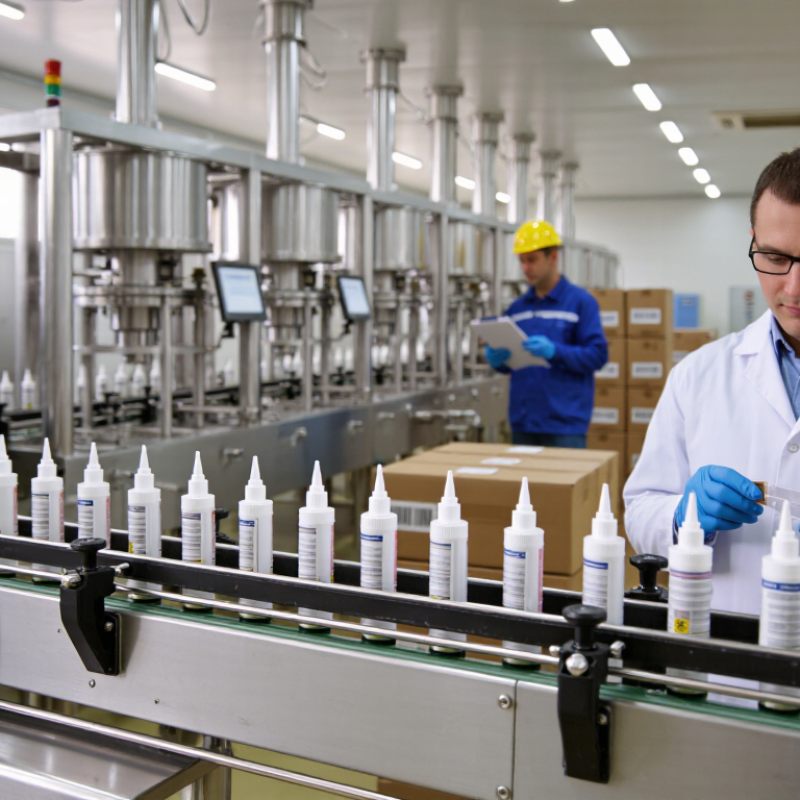
China Top Liquid Nails Manufacturers: How to Choose?
Liquid nails should be classified by chemistry before comparing manufacturers. Solvent-based adhesives often provide strong initial grab and perform well on porous materials. Water-based formulas usually offer lower odor, but they may require longer drying time. Polyurethane systems react with moisture and can tolerate movement. Hybrid polymer adhesives combine elasticity with reliable outdoor resistance. The categories overlap. Labels can mislead.
Bond strength needs context. ASTM D1002 measures apparent shear strength in single-lap metal joints, not every wall or floor application. ASTM C557 applies to adhesives used for fastening gypsum wallboard. ASTM D3498 covers field-glued subfloor systems. A credible manufacturer should provide the exact test method, substrate, curing period, temperature, and failure mode. One number is not enough. I would question any brochure showing high psi values without test conditions.
A 2024 Mordor Intelligence market assessment estimated the global construction adhesives market at about US$11.6 billion, with roughly 6.6% annual growth projected through 2029. This growth increases supplier choices, but not necessarily product quality. Ask manufacturers for batch traceability, technical data sheets, safety documentation, and independent test reports. Check whether the adhesive matches concrete, wood, metal, foam, or damp masonry. A small sample test remains valuable. Real surfaces are rarely perfect. Surface dust, uneven gaps, and cold temperatures can reduce performance sharply.
| Chemistry Class | Typical Composition | Typical Bond Profile | Suitable Substrates and Uses | Main Limitations | Relevant ASTM Test Standards |
|---|---|---|---|---|---|
| Water-Based Latex Including acrylic or vinyl-acrylic adhesive systems |
Polymer dispersion in water with fillers, tackifiers, preservatives, and rheology modifiers | Usually medium initial grab; develops strength as water evaporates; generally flexible rather than highly rigid | Porous building materials, wood, gypsum board, trim, molding, and interior assembly work | Limited performance on wet or nonporous surfaces; drying can be slow between two impermeable substrates; may be unsuitable for freeze–thaw exposure unless specifically formulated | ASTM C557 for adhesives used to fasten gypsum wallboard; ASTM D3498 for qualifying wood-panel adhesive performance where applicable |
| Solvent-Based Rubber or Resin | Synthetic rubber or resin dissolved in organic solvents, commonly supported by tackifiers and mineral fillers | High initial grab and fast handling strength; often remains tough and flexible after solvent evaporation | Construction trim, paneling, metal-to-wood assemblies, selected nonporous substrates, and applications requiring immediate hold | VOC, odor, flammability, and substrate-compatibility concerns; solvent attack may affect some plastics, foams, coatings, or freshly painted surfaces | ASTM D1002 for comparative lap-shear testing on metal specimens; ASTM D903 for peel adhesion when the product design requires peel evaluation |
| Polyurethane (PU) | Moisture-reactive polyurethane prepolymer; some formulations are one-component and cure with ambient moisture | High cohesive strength, good flexibility, and strong adhesion to many porous substrates; cure rate depends on humidity, temperature, and joint geometry | Wood, concrete, masonry, metals, selected plastics, exterior construction, and assemblies exposed to vibration or movement | Requires suitable moisture for curing; excess adhesive may foam; surface preparation and compatibility testing are important; cured material can be difficult to remove | ASTM D3498 for field-glued wood structural panels; ASTM D1002 for comparative lap-shear testing; ASTM D903 for peel testing when relevant |
| Silane-Modified Polymer (SMP) Also called MS polymer or hybrid polymer |
Moisture-curing silane-terminated polymer with mineral fillers and adhesion promoters; typically solvent-free or very low in solvent | Strong, elastic bond with good movement tolerance; generally provides balanced adhesion, weatherability, and low-odor handling | Interior and exterior trim, metal, wood, masonry, glass, coated surfaces, and mixed-substrate installations | Cure speed may decrease in dry or confined joints; some low-energy plastics and contaminated surfaces require primers or special preparation | ASTM C920 may be relevant when the product is designed and specified as an elastomeric joint sealant; ASTM D1002, D903, or D3163 may be used for comparative adhesive testing |
| Hybrid Acrylic or Reactive Acrylic | Acrylic-based reactive adhesive system, often formulated for rapid fixture and strong bonding to selected difficult surfaces | Can provide high strength and fast fixture; final performance depends strongly on surface energy, gap size, and formulation | Metal, rigid plastics, composites, and engineered assemblies where rapid strength development is required | May have strong odor or limited repositioning time; compatibility with painted or plastic surfaces must be verified before production use | ASTM D1002 for metal lap shear; ASTM D3163 for plastic lap shear; ASTM D1876 for T-peel performance where applicable |
| Performance Dimension | What It Measures | How to Interpret It | Common ASTM Method |
|---|---|---|---|
| Initial Grab | The ability to hold a component shortly after contact and light pressure | Important for vertical trim and overhead installation; it is not the same as cured bond strength | Product-specific test procedures; ASTM results should be checked for the exact test configuration because no single ASTM method universally defines “initial grab” |
| Lap-Shear Strength | Resistance to sliding forces parallel to the bonded joint | Useful for comparing adhesive strength on the same substrate, bond area, cure time, and test condition | ASTM D1002 for metal specimens; ASTM D3163 for rigid plastic specimens |
| Peel Strength | Resistance to progressive separation when one bonded material is peeled away | Relevant to flexible trim, films, laminates, and joints exposed to edge lifting; flexible adhesives generally perform better than brittle adhesives | ASTM D903 for peel or stripping strength; ASTM D1876 for T-peel of flexible adherends |
| Wood-Panel Bond Performance | Suitability for field-gluing wood structural panels to framing or supporting members | The adhesive must be assessed under the environmental and substrate conditions specified for the intended construction system | ASTM D3498 |
| Gypsum Wallboard Adhesion | Performance of adhesives intended to fasten gypsum wallboard to wood framing | Use only when the adhesive and installation are within the scope of the specification and project requirements | ASTM C557 |
| Movement and Weathering | Ability to remain bonded and flexible during temperature, moisture, and joint movement cycles | More important for exterior joints and dissimilar materials than a single dry lap-shear value | ASTM C920 is applicable to qualifying elastomeric joint sealants; confirm the product’s stated class and test results |