Inquiry
Form loading...

Why Choose Water Based Adhesive Sealant?

Water-Based Adhesive Sealant is gaining attention because it can offer practical bonding and sealing performance without relying on a solvent-heavy formulation. The wider market is substantial: Grand View Research estimated the global water-based adhesives market at about US$20.8 billion in 2023. That figure covers adhesives broadly, not sealants alone, so it should not be mistaken for a sealant-market total. Still, it signals how important water-based systems have become across packaging, construction, and consumer goods.

The appeal is tangible on the workbench. A water-based product can be easier to clean from a tool before it dries, and its low-odor application may suit indoor projects. But “water-based” is not a guarantee of low emissions or universal compatibility. Substrate porosity, humidity, cure time, and service temperature all matter. A neat bead on a sample panel can behave differently on a dusty, damp wall.

Adhesive chemist and technical writer Dr. Dave Dunn’s published guidance points to a useful principle: select an adhesive for the substrate, process, and end-use—not the label alone. That is a paraphrase, not a verified verbatim quotation. Worth remembering. The U.S. EPA’s Safer Choice Standard also offers a useful reference for evaluating product ingredients and environmental claims, though certification should never replace checking technical data sheets. Water-based may be a strong fit. It still deserves a real-world test.
Why Choose Water Based Adhesive Sealant?

What Is a Water-Based Adhesive Sealant?

Why Choose Water Based Adhesive Sealant?

What Is a Water-Based Adhesive Sealant?

A water-based adhesive sealant is a paste or liquid that uses water as its carrier, with polymers providing adhesion and flexibility. As it dries, water evaporates and the polymer forms a bond or sealing film. It is commonly used around interior trim, porous building materials, and small gaps. The exact formula matters: some products contain additives or preservatives, so “water-based” does not automatically mean VOC-free or suitable for every job.

Performance needs checking, not guessing. ASTM International’s C920 specification classifies elastomeric joint sealants by movement capability; a Class 25 sealant is designed to accommodate movement of plus or minus 25% of the joint width under specified tests. Not every water-based product meets this classification. A narrow bead on dry drywall may work well, while a damp, moving exterior joint may need another formulation. That distinction matters.

Tips: Check the technical data sheet for substrate compatibility, drying time, and movement rating. Apply a small test bead on the actual surface; porous materials can draw moisture away quickly and affect the finish. Water-based products can be easier to clean before drying, but patience is still needed. A rushed paint-over can spoil an otherwise neat edge.

Why Choose a Water-Based Adhesive Sealant?

What is a water-based adhesive sealant? It is a sealant or adhesive in which water is the primary liquid carrier. As it dries, water evaporates and the polymer forms a bond or film.

The chart shows general formulation characteristics, not product performance ratings. Water-based products may allow water cleanup while uncured, but always check the product label or technical data sheet.

How Water-Based Adhesive Sealants Bond and Seal

Why Choose Water Based Adhesive Sealant?
How Water-Based Adhesive Sealants Bond and Seal

A water-based adhesive sealant starts as polymer particles dispersed in water. When applied, the liquid wets the surface and fills small irregularities. As water evaporates or enters a porous substrate, the particles move closer, merge, and form a continuous bond. The sealant’s flexible polymer then helps close the joint against air and moisture. Not instantly. A thick bead, cold conditions, or a nonporous surface can slow drying, so the outer skin may form before the center cures.

Surface preparation matters. Dust, oil, and standing water can interrupt contact, while a clean, compatible substrate gives the polymer a better chance to adhere. ASTM D1002 provides a standard method for measuring adhesive lap-shear strength; its metal test specimens use a 12.7 mm overlap. That figure describes the test setup, not a guaranteed strength for every product or job. Real joints vary.

Sealing performance needs its own check. ASTM C719 evaluates sealant adhesion and cohesion under repeated joint movement, including testing for 25% movement classes. A useful field detail is bead geometry: a bead that is too deep may cure slowly, while a very thin bead may not accommodate movement well. Water-based formulas can be practical for many indoor applications, but “water-based” alone does not predict bond strength or cure time. Substrate, humidity, temperature, and joint design still deserve a closer look.

Key Benefits for Safety and the Environment

Water-based adhesive sealants use water as a carrier, which can mean fewer solvent emissions during application than some solvent-based products. The exact formulation matters, so check the product’s technical data and safety sheet rather than relying on the label alone. Less odor is possible, but it does not mean zero emissions.

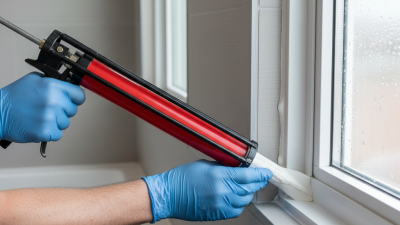
That matters indoors. Apply the sealant with steady airflow, and avoid skin or eye contact while it is wet. A bead along a window frame may look harmless, yet uncured material can still irritate. Follow the stated curing time before painting or allowing regular contact. Keep children and pets away from fresh work.

For cleanup, tools may often be rinsed with water before the sealant dries. That is convenient. Still, do not pour leftover product or rinse water into a drain; follow local disposal guidance. Reduced solvent use can support better indoor air and lower emissions, but water-based products are not automatically harmless to aquatic life. I have found that drying conditions can also be less predictable in cold, damp rooms. Allow extra time when needed, and assess the actual site rather than assuming every application will behave alike.

Why Choose Water Based Adhesive Sealant? - Key Benefits for Safety and the Environment

Dimension Typical Water-Based Profile Practical Benefit Important Consideration
Carrier Water is the primary liquid carrier in many water-based formulations. Can reduce reliance on organic solvents compared with some solvent-based products. Check the product safety data sheet (SDS) and technical data sheet (TDS); formulations vary.
VOC emissions VOC content can be low, but it depends on the formulation and applicable test method. May help meet project specifications for indoor air quality or VOC limits. “Water-based” does not mean VOC-free. Confirm the stated VOC value and the relevant local requirements.
Handling and odor Many products have less solvent odor than conventional solvent-based alternatives. Can make application more comfortable in suitable, well-ventilated work areas. Low odor does not establish that a product is harmless. Follow label precautions and provide appropriate ventilation.
Flammability Water-based products are often less flammable in the wet state than solvent-rich products. May reduce certain fire hazards during storage and application. Do not assume the product is nonflammable. Check its SDS, especially for dried residue, additives, and storage conditions.
Tool cleanup Some uncured products can be cleaned from tools with water. May simplify routine cleanup and reduce the need for solvent cleaners. Cleanup requirements differ by product. Prevent wash water or uncured material from entering drains unless the label permits it.
Curing process Many water-based products develop a bond as water leaves the applied material. Avoids relying solely on solvent evaporation for film formation. Drying can take longer in cool, humid, or poorly ventilated conditions. Allow the specified drying or cure time before loading the joint.
Substrate compatibility Performance depends on the adhesive chemistry and the surfaces being joined or sealed. Suitable products can work well on compatible porous and selected nonporous materials. Moisture-sensitive materials and nonporous surfaces may need special preparation or a different product. Test first when needed.
Temperature and storage Some water-based products can be damaged by freezing or extreme temperatures. Following storage guidance helps preserve product performance. Store within the temperature range on the label and protect the product from freezing where specified.
Environmental profile Lower solvent use may reduce some emissions associated with application. Can be a useful option when a project prioritizes lower-VOC materials. Environmental impact also depends on ingredients, manufacturing, durability, packaging, and disposal. Review product-specific documentation.
General comparison only. Actual safety, emissions, curing, and performance depend on the specific product and its conditions of use.

Common Applications and Compatible Materials

Water-based adhesive sealants are commonly used in paper packaging, carton sealing, labels, woodworking, flooring, and interior construction. They work especially well on absorbent materials such as paper, cardboard, untreated wood, and some textiles. On a workshop bench, that may mean bonding a paper label to a carton or fixing a timber trim without solvent-heavy application.

MarketsandMarkets’ Adhesives and Sealants Market report estimated the global market at US$72.5 billion in 2022 and projected US$85.4 billion by 2028. That figure covers many adhesive types, not water-based products alone, but it shows the breadth of uses across manufacturing and construction. For water-based formulations, the material pairing still matters: porous surfaces help moisture escape, while glass, metal, and plastic often need a specifically formulated product or surface preparation.

Take care with low-absorption plastics such as polyethylene and polypropylene. The adhesive may bead, dry slowly, or form a weak bond. Constant moisture and cold conditions can also affect performance. Test first. I would check the product’s technical data sheet, then try a small sample under actual site conditions; “water-based” does not guarantee universal compatibility.

What to Consider When Choosing a Formulation

Why Choose Water Based Adhesive Sealant?

What to Consider When Choosing a Formulation

Choosing a formulation starts with the surfaces and conditions at the job site. Concrete, painted wood, and metal can behave very differently. A porous surface may absorb water quickly, while a smooth one may need careful adhesion testing. Check the product’s stated compatibility rather than assuming one sealant suits every material. A small test bead can reveal poor wetting, edge lifting, or unexpected discoloration. It is a simple step, but easy to skip.

Consider joint movement, moisture, and drying conditions too. Water-based formulations generally need water to evaporate, so thick beads, cool weather, and high humidity can extend drying time. If a joint may get wet soon after application, check the specified cure requirements. Also match the formulation’s flexibility and intended use to the joint; a rigid seal may crack where movement is frequent. Read the technical data sheet, especially for application temperature and bead dimensions. Real sites are rarely ideal. I would still test the exact substrate and finish before committing to a large area, because surface preparation can change the result.