Why Choose Construction Glue for Your Building Projects?
In the world of construction, choosing the right materials can make a significant difference. Construction Glue stands out for various reasons. This adhesive provides strong bonding solutions that can enhance durability in building projects. Construction Glue is versatile and can be used on multiple surfaces, from wood to concrete.
Many builders prefer Construction Glue due to its ease of use. Applying it requires minimal tools and can save valuable time. Moreover, it speeds up the assembly process, helping to meet tight deadlines. However, it’s essential to recognize that not all Construction Glue products perform equally. Compatibility with specific materials is crucial and should not be overlooked.
Furthermore, construction projects often involve unexpected challenges. Builders might face conditions that compromise adhesive performance. For example, extreme temperatures can affect curing times and bond strength. Therefore, thorough research and testing are necessary when selecting Construction Glue for various applications. Balancing efficiency and reliability is key to achieving successful outcomes in construction endeavors.
Benefits of Using Construction Glue in Building Projects
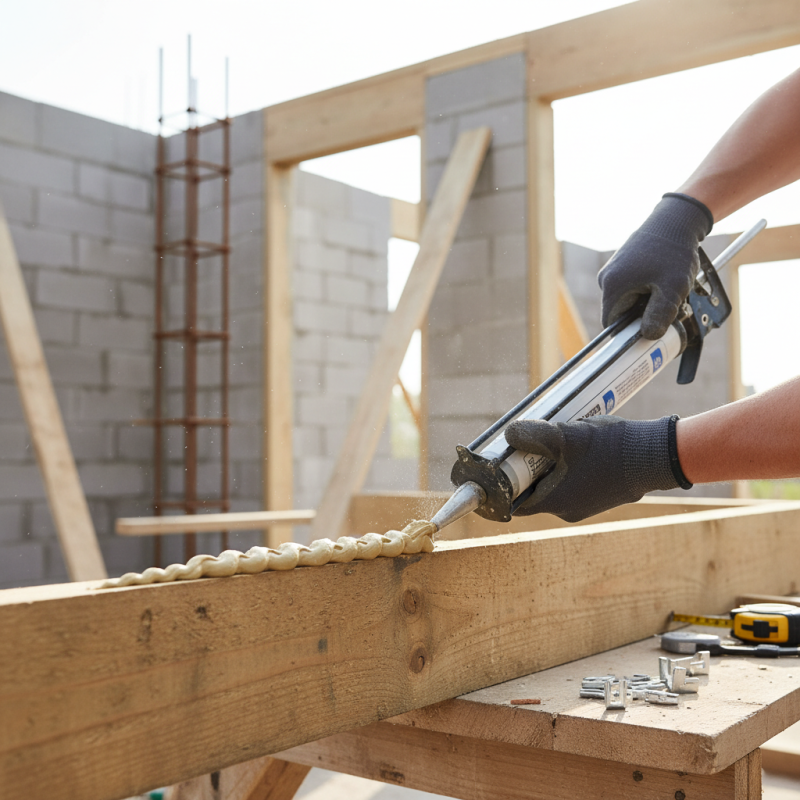
Construction glue is a game-changer for building projects. It provides strong bonding for various materials like wood, metal, and concrete. This versatility allows builders to use it in different applications, from small repairs to large structures. Its quick-setting nature saves time, enabling faster project completion.
One significant benefit is the ease of use. Many construction glues require no mixing. Simply apply, press the surfaces together, and wait for it to set. This makes it ideal for both professionals and DIY enthusiasts. However, beginners might struggle with application techniques. A little practice can lead to better results.
Durability is another key advantage. Construction glue often withstands harsh weather. It remains strong when exposed to moisture and temperature changes. Yet, it’s essential to choose the right glue for specific conditions. Using incorrect types can lead to failures. This is a common oversight, and learning from mistakes can improve future projects.
Comparative Analysis: Construction Glue vs. Traditional Adhesives
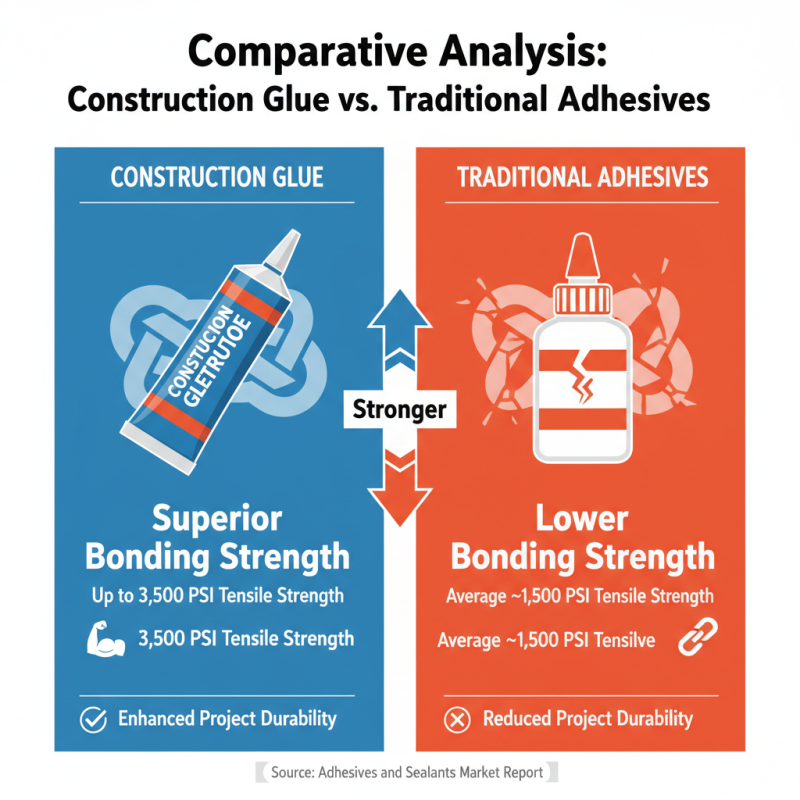
When comparing construction glue to traditional adhesives, several factors come into play. Construction glue often offers superior bonding strength. According to a report from the Adhesives and Sealants Market, construction adhesives can achieve a tensile strength of up to 3,500 psi, whereas traditional adhesives often fall short, averaging around 1,500 psi. This significant difference can impact project durability.
Moisture resistance is another crucial aspect. Studies show that construction glue is designed to withstand various environmental conditions. Traditional adhesives may not perform as well in humid environments. This can lead to bond failure over time. Furthermore, the curing time of construction glue is often shorter. It means faster project completion. However, some construction glues take longer to develop full strength. This requires careful planning and patience from builders.
Cost is also a consideration. While construction glue might be more expensive upfront, its long-term benefits can lead to savings in maintenance and repairs. A study by the Construction Industry Institute noted that projects using advanced adhesive technologies often reduce overall costs by 15-20%. Yet, not all projects may benefit equally from such investment. Each application should be evaluated individually for the best results.
Factors to Consider When Choosing Construction Glue
When selecting construction glue for your projects, consider its application. Different tasks require different adhesives. For instance, wood projects often benefit from stronger bonds. Meanwhile, tiling may need moisture-resistant alternatives. Evaluate the surfaces you will bond. Some glues work only on porous materials, while others perform well on plastics or metals.
Tips: Always test the glue on a small area first. This ensures compatibility and strength. Also, check for drying times. Some adhesives set quickly, while others require hours to cure. An inadequate cure time can lead to weak bonds.
Another factor is the environment where the glue will be used. For outdoor projects, select a product that can withstand temperature changes and moisture. Indoor projects might focus more on aesthetic qualities. However, safety concerns should not be overlooked. Certain adhesives release harmful vapors, so adequate ventilation is vital.
Tips: Always wear gloves and goggles. It’s easy to overlook personal safety when focused on the project. Reflect on your experiences with past adhesives to avoid repeated mistakes. Remember, a little planning can save a lot of trouble down the road.
Applications of Construction Glue in Various Construction Settings
Construction glue plays a crucial role in various construction settings. It is known for providing strong adhesion across diverse materials. A study by the Adhesive and Sealant Council indicates that adhesives can improve the strength of bonded joints by up to 50%. This is significant for structural integrity.
In residential projects, construction glue is widely used for flooring, cabinets, and moldings. It fills small gaps and ensures a seamless finish. A contractor once reported that using glue on wooden floors reduced squeaking by 80%. However, some applications may require mechanical fasteners for added strength. This balance is vital for long-lasting results.
In commercial settings, construction glue bonds materials like concrete, metal, and wood. This versatility is attractive. Yet, one must consider the environment. High humidity can weaken some adhesives. A recent report highlighted that improper conditions can lead to early failures in bonded joints. This underlines the importance of choosing the right glue for specific contexts.
Tips for Effective Use of Construction Glue in Your Projects
When using construction glue, preparation is key. Start by ensuring that surfaces to be bonded are clean and dry. Dust, oil, or moisture can weaken the bond, leading to issues later. A quick wipe with a cloth can make a big difference.
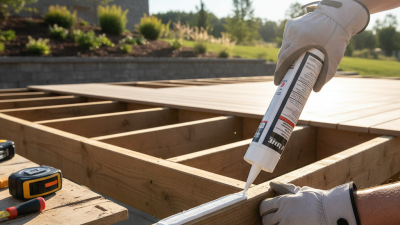
Application techniques vary. Apply the glue evenly for a strong hold. Use a brush or spreader for larger areas. For smaller spots, a simple squeeze from the tube might suffice. Remember, too much glue can create a mess and weaken the bond. Take those few extra seconds to measure.
Cure time is crucial. Allow the glue to set as per guidelines. Rushing through this step often results in failures. It’s worthwhile to check your work after setting. Small adjustments can save you future headaches. Embrace the learning curve; not every project will go flawlessly. Each use of construction glue teaches something new.