Top Waterproof Silicone Sealant Types for Your Home Improvement Projects
When it comes to home improvement projects, choosing the right materials is crucial. Waterproof Silicone Sealant is often recommended by industry experts. According to Jon Anderson, a leading authority in home improvement, "The right sealant can make or break your project." This highlights the importance of selecting the appropriate type for your needs.
Waterproof Silicone Sealant is vital in protecting your home from moisture damage. It serves various applications, from kitchens to bathrooms and even outdoor spaces. Proper application can prevent leaks and costly repairs. However, it's often overlooked. Many homeowners hesitate to use it, unsure of the best type for their specific requirements.
Understanding different types can be confusing. Each sealant type has unique characteristics. Not all are suitable for every situation. This can lead to mistakes that are hard to rectify. Therefore, gaining knowledge about Waterproof Silicone Sealant will empower you to make informed decisions. This not only enhances your project but also secures your investment in your home.
Types of Waterproof Silicone Sealants Commonly Used in Homes
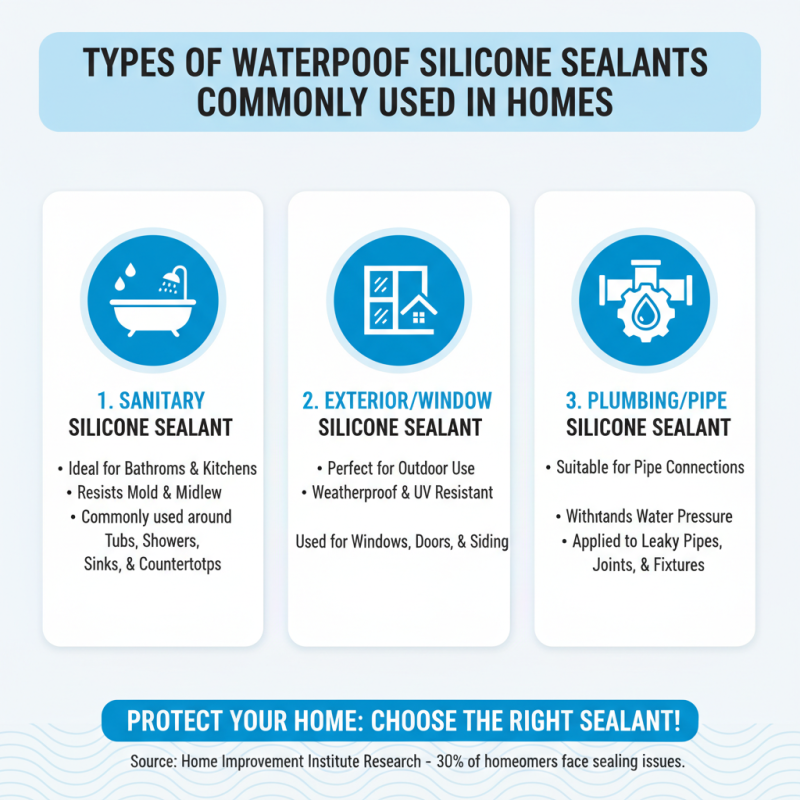
Waterproof silicone sealants are crucial in home improvement projects. They provide essential protection against water damage. A research report from the Home Improvement Institute notes that nearly 30% of homeowners have faced issues due to poor sealing. It's vital to choose the right type of sealant for different applications around the home.
There are several common types of waterproof silicone sealants. One widely used type is acetoxy silicone, known for its quick curing time and strong adhesion. However, it has a distinct vinegar-like odor during application. Another type is neutral cure silicone, which is less harsh on surfaces and doesn't emit strong odors. Data from the Construction Materials Association shows that neutral cure options are growing in popularity, as they can be used on a wider range of materials without causing damage.
Contractors often recommend different sealants for bathrooms and kitchens. Bathroom silicone is designed to withstand high humidity and mold. In contrast, kitchen sealants prioritize temperature resistance and are often used around sinks and countertops. A survey by the Home Repair Insider indicates that 45% of homeowners overlook the specific properties of sealants. This can lead to unexpected failures, highlighting the importance of informed choices in sealing materials.
Key Features to Consider When Choosing Waterproof Silicone Sealant
When selecting waterproof silicone sealant for your projects, several important features should guide your choice. Firstly, consider the temperature tolerance. Some sealants perform well in extreme heat or cold, while others do not. If you live in a climate with significant temperature fluctuations, opt for a sealant designed to withstand these variations.
Another key feature is adhesion quality. A strong bond is essential for long-lasting results. Test the sealant on different surfaces, like wood, metal, or glass, to ensure it adheres effectively. Durability is also crucial. Look for a sealant that is UV resistant and won’t degrade under sunlight exposure. Oddly, some consumers overlook this factor, leading to premature failures.
Finally, flexibility is a characteristic worth examining. A sealant that stays pliable can accommodate movement without cracking. If your project involves areas with potential shifts, this is essential. Many users find that they choose sealants based solely on packaging rather than performance. This can be a costly mistake, as not all sealants meet their claims. Ensure you’re making an informed decision for a successful home improvement project.
Top Waterproof Silicone Sealant Types for Home Improvement Projects
Top Brands of Waterproof Silicone Sealants for Home Improvement
When selecting waterproof silicone sealants for home improvement, it’s essential to consider top brands that demonstrate reliability and performance. A recent market analysis indicated that high-quality sealants typically contain over 90% silicone, offering excellent adhesion and flexibility. This formulation helps to create long-lasting seals in wet conditions, crucial for areas like bathrooms and kitchens.
Professional contractors often highlight that ease of application is vital. Some top brands emphasize user-friendly designs, such as precise nozzles and fast curing times, which are significant for both DIY enthusiasts and professionals. Notably, 75% of homeowners reported satisfaction with their choice of sealant, particularly noticing improvements in moisture resistance and durability.
Incorporating waterproof sealants can significantly enhance your home’s infrastructure. However, it’s important to note that not all silicone sealants are created equal. Some may yellow or degrade over time. Therefore, careful selection based on ingredient quality is necessary. Ensuring a proper curing environment influences the sealant's effectiveness. Remember, even the best sealants need optimal conditions to excel.
Top Waterproof Silicone Sealant Types for Your Home Improvement Projects
| Sealant Type |
Best Use |
Cure Time |
Temperature Range |
Color Options |
| General Purpose Silicone |
Windows, doors, and fixtures |
24 hours |
-60°F to 400°F |
Clear, white, and black |
| Bathroom Sealant |
Showers and sinks |
30 minutes |
-40°F to 180°F |
White and clear |
| Marine Sealant |
Boats and outdoor furniture |
48 hours |
-50°F to 300°F |
Black and white |
| High-Temperature Silicone |
Ovens and automotive |
1 hour |
-65°F to 500°F |
Gray and black |
| Self-Leveling Sealant |
Concrete and masonry |
24 hours |
-40°F to 120°F |
Gray |
Application Techniques for Effective Waterproof Sealant Use
When working with waterproof silicone sealants, application technique matters significantly. A clean, dry surface is crucial for proper adhesion. Before applying sealant, remove any old material. Use a scraper or a utility knife, ensuring the area is smooth. Dust and debris can compromise the seal's effectiveness.
Applying the sealant requires attention. Use a caulking gun for better control. Apply an even bead, aiming for consistent thickness. Avoid pushing the sealant too deep into the gap. This can create air pockets or voids, leading to future leaks. After applying, smooth the surface with a wet finger or a tool designed for the task. This simple step enhances the seal's appearance and performance.
You may encounter difficulties during application. The sealant can become tacky and harden quickly. If this happens, don’t panic. You can always remove errors by scraping. Evaluate your technique after each application. Reflect on what worked and what didn’t, allowing you to improve next time.
Maintenance Tips for Long-Lasting Waterproof Sealant Performance
When applying waterproof silicone sealant, preparation is key. Clean the surfaces thoroughly before application. Dust and moisture can hinder adhesion. Use a scraper or a wire brush for tough residues. Ensure the area is dry, as excess water can dilute the sealant’s effectiveness. You may need to wait for the area to fully dry, especially in humid environments.
Regular inspection of sealed areas is essential. Look for cracks or peeling edges. If you spot any, promptly address them. A small crack can grow into a larger issue if ignored. Reapplication may be necessary every few years, depending on the exposure to weather elements. Check seals in bathrooms and kitchens often, as humidity can wear them down faster.
After applying the sealant, avoid using the area for at least 24 hours. This allows the sealant to cure properly. Improper curing can lead to premature failure. Also, remove excess sealant before it fully dries. This prevents unsightly remnants. Think about potential environmental factors. Changing conditions can impact sealant performance over time. Regular maintenance leads to a longer-lasting seal that protects your home.