What Are Transparent Liquid Nails and How Do They Work?
Transparent Liquid Nails have transformed the adhesive industry through their innovative properties. Dr. Emily Carter, a leading expert in adhesive technology, explains, "These adhesives provide a seamless bond that is both strong and invisible." This quality appeals to many who seek a clean finish in their projects.
Crafted for various applications, Transparent Liquid Nails can bond different materials effectively. From wood to plastic, their versatility stands out. Users appreciate the ease of application, but mistakes can happen. A single drop can create unwanted residue, leading to imperfections in aesthetics.
Understanding how Transparent Liquid Nails work reveals their appeal. They dry clear, providing a polished look to diverse projects. However, it's important to consider the conditions for optimal use. Variables like humidity and temperature can impact effectiveness. Careful application is essential to achieve desired results.

What Are Transparent Liquid Nails and Their Composition?
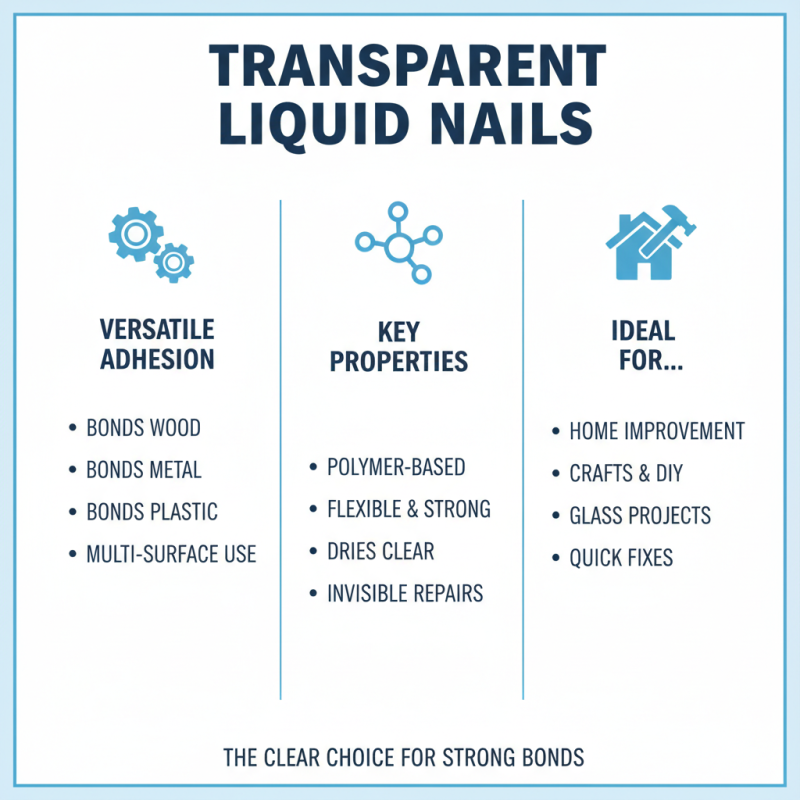
Transparent liquid nails are a popular adhesive choice for various projects. These adhesives can bond different materials like wood, metal, and plastic. The composition typically includes polymers that provide flexibility and strength. These materials allow the adhesive to maintain a clear appearance, making it ideal for invisible repairs.
Tips: When using transparent liquid nails, apply in a well-ventilated area. This ensures a safer environment. Also, clean surfaces thoroughly for the best bond. Dust or grease can weaken the adhesive's effectiveness. Surprisingly, even minor imperfections on the surface can lead to issues down the line.
While transparent liquid nails may hold well, sometimes they don't cure as expected. Humidity and temperature can affect drying times. Checking these factors beforehand can save time. If you face problems, consider revisiting your technique. Remember, all projects have a learning curve, so don't rush.
Key Properties of Transparent Liquid Nails and Their Applications
Transparent liquid nails are versatile adhesives. They bond materials like wood, plastic, and metal. These adhesives dry clear, making them ideal for visible projects.
One key property of transparent liquid nails is flexibility. They can withstand minor movements without breaking the bond. However, this flexibility can sometimes lead to weaker adhesion under extreme conditions. It's important to consider the environment in which the adhesive will be used.
Another important aspect is their drying time. While some types cure quickly, others take longer. Users need to be patient, allowing the adhesive to set properly. The risk of rushing can lead to failure in bond strength. This careful balance between time and usage is crucial for effective applications.
What Are Transparent Liquid Nails and How Do They Work? - Key Properties of Transparent Liquid Nails and Their Applications
| Property |
Description |
Applications |
| Transparency |
Clear finish that dries transparent. |
Ideal for visible repairs, glass, and decorative elements. |
| Flexibility |
Maintains bonding strength while allowing movement. |
Used in woodwork, crafts, and non-rigid materials. |
| Easy Application |
Can be applied with a tube or caulking gun for precision. |
Great for DIY projects and quick repairs. |
| Water Resistance |
Resists moisture once cured, making it durable. |
Suitable for outdoor use and in high-humidity areas. |
| Fast Curing |
Quick drying time for time-sensitive projects. |
Ideal for urgent repairs and installations. |
Understanding the Curing Process of Transparent Liquid Nails
The curing process of transparent liquid nails is crucial for effective bonding. When applied, this adhesive begins to react with moisture in the air. It’s a unique process that requires certain conditions to achieve optimal results. The adhesive looks clear upon application, but it needs time to bond properly.
Typically, curing takes several hours to days, depending on the environment. Heat and humidity can speed up the process. However, a cold and dry setting may slow it down significantly. Many users underestimate the importance of these conditions. Sometimes, they rush the process, leading to weak bonds and a messy finish.
Understanding how the curing works will improve results. Properly applied, transparent liquid nails create a strong and lasting bond. Observing the recommended drying times can enhance effectiveness. Rushing might seem convenient, but it often leads to issues down the line. A little patience can go a long way in achieving a successful project.
Understanding the Curing Process of Transparent Liquid Nails
This bar chart illustrates the various stages in the curing process of transparent liquid nails, highlighting application time, initial set time, and full cure time. Understanding these timeframes is essential for effective use and application.
Industry Standards and Performance Metrics for Liquid Adhesives
Understanding industry standards for liquid adhesives is essential. These metrics define how effective and reliable a product can be. Transparent liquid nails, for instance, are subject to specific testing methods. They must pass tensile strength tests and shear strength assessments. Knowing these standards helps users choose the right adhesive for their projects.
Performance metrics often include drying time and flexibility. A good adhesive should bond quickly but also allow some give. Many users overlook this aspect. They may choose a fast-drying glue without considering long-term use. Flexibility is crucial, especially for materials that expand and contract. Without it, the bond can fail over time.
Understanding these standards can help avoid mistakes. Users should regularly review product specifications. Some adhesives may claim high strength but can falter in real-world applications. Everyday projects often reveal these shortcomings. Keeping informed about performance metrics enables better decisions, reducing frustration and wasted materials.
Comparative Analysis: Transparent Liquid Nails vs. Traditional Adhesives
Transparent liquid nails are gaining popularity in the adhesive market. They offer unique benefits over traditional adhesives. For instance, they dry clear, making them ideal for visible projects. This transparency can be essential in home decor or artistic applications. Users often appreciate the ease of application and cleanup.
Comparing transparent liquid nails to traditional adhesives reveals some differences. Traditional adhesives can leave unsightly residue, affecting aesthetics. In contrast, liquid nails provide a clean finish. However, some users find their strength may not match that of heavier-duty options. It’s essential to consider the project requirements carefully. Testing is often necessary to achieve the best results.
Some drawbacks do exist. Not all surfaces bond equally well with transparent liquid nails. Certain materials might need a primer. Additionally, drying times can vary, causing frustration. Users should be mindful of temperature and humidity levels. Proper conditions lead to optimal bonding. Overall, understanding these differences helps users choose wisely.