What is Liquid Nail Free Glue and How Does It Work?
Liquid Nail Free Glue is reshaping the adhesive industry. John Smith, an expert in bonding technologies, notes, “This glue offers a versatile solution for various projects.” Its unique formulation allows for a strong bond without the mess of traditional adhesives.
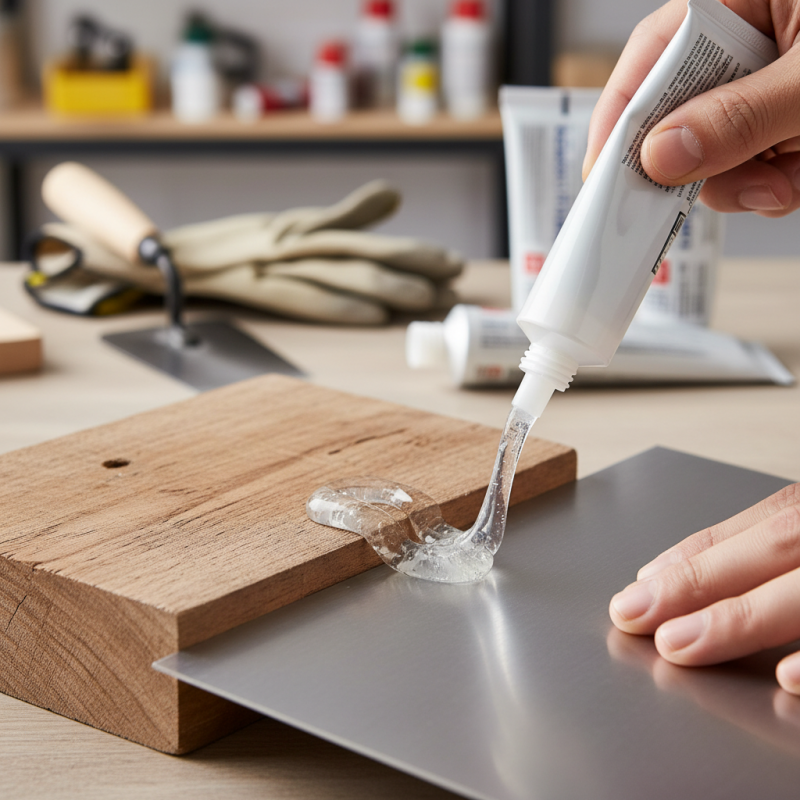
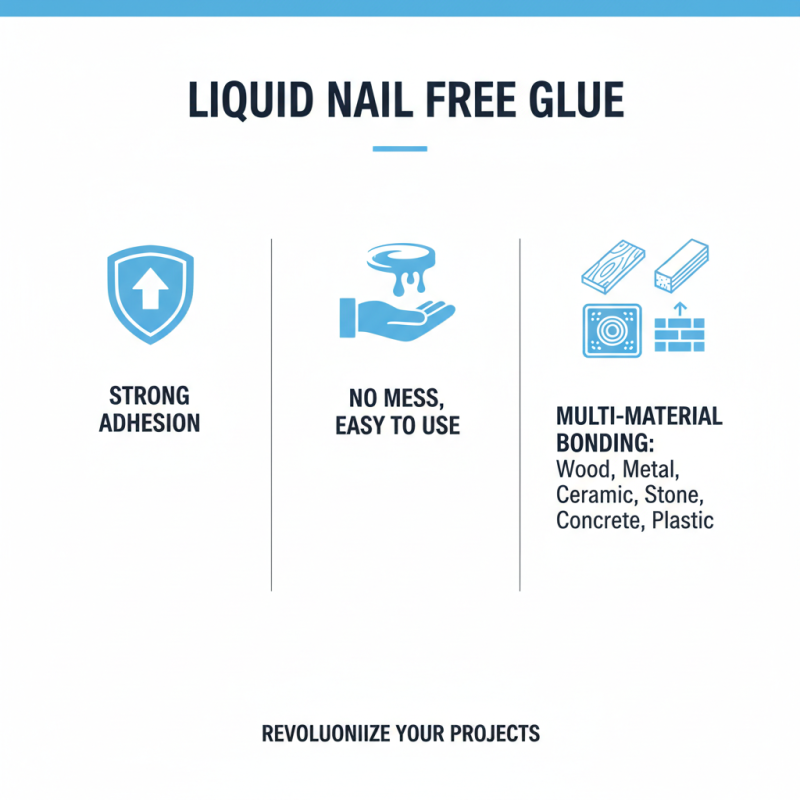
This innovative product caters to both professionals and DIY enthusiasts. It works on multiple surfaces, such as wood, metal, and ceramics. Users appreciate its quick-drying nature and strong adhesion. However, some find it tricky to apply evenly, leading to uneven bonding in certain cases.
As with any product, it has its challenges. Consistent application can be a struggle for beginners. Users may find improvement is needed for optimal results. Liquid Nail Free Glue is an exciting development, but mastery comes with practice.
What is Liquid Nail Free Glue and Its Composition Overview
Liquid Nail Free Glue is an innovative adhesive designed for various building and crafting projects. Its key ingredients include polymers, water, and additives that enhance adhesion. The result is a strong, versatile glue that dries clear and flexibly. This formulation allows it to bond a range of materials like wood, plastic, and metal.
When using this glue, preparation is essential. Ensure your surfaces are clean and dry. A small amount goes a long way. Too much can lead to messy applications. Be mindful of the drying time. It typically sets quickly, but full strength develops over time.
**Tip:** Test on a small area first. This helps you gauge how the glue interacts with your materials. If you notice unexpected results, rethink your application method. Sometimes adjustments lead to better outcomes. Remember, achieving a perfect bond requires patience and precision.
Key Properties of Liquid Nail Free Glue: Strength and Flexibility
Liquid Nail Free Glue is gaining recognition for its impressive properties, particularly its strength and flexibility. This unique adhesive performs exceptionally well in various applications, from crafts to home repairs. One standout feature is its ability to bond different materials together, like wood, metal, and plastic. When cured, it forms a solid structure that can withstand significant stress.
Strength is vital for any adhesive, and Liquid Nail Free Glue delivers. Users often mention how it holds under pressure, resisting peeling and breaking. Its flexibility is equally important. It allows bonded materials to move slightly without compromising the connection. This characteristic is invaluable in situations where temperature changes or physical movement might occur.
However, not everyone finds it easy to use. Some struggle with the application process, leading to messy results. Proper surface preparation is crucial. Without it, the glue may not adhere as well as intended. A little patience goes a long way here. It might take a few tries to master the technique, but the results can be rewarding. Flexibility, combined with strong bonding capabilities, makes it a versatile choice.
Applications of Liquid Nail Free Glue in Construction and DIY Projects
Liquid Nail Free Glue is gaining popularity in construction and DIY projects. It offers strong adhesive power without the mess traditional glues create. This glue can bond various materials, making it versatile for many applications.
In construction, Liquid Nail Free Glue is used for attaching panels, trim, and moldings. It dries clear, providing a clean finish. However, it requires careful application. Over-application can lead to unsightly excess that is hard to clean. DIY enthusiasts find it useful for crafting and home repairs. It adheres well to wood, metal, and more. Yet, humidity can affect its performance, which must be considered.
For outdoor projects, choosing the right adhesive is crucial. Liquid Nail Free Glue has limitations when exposed to extreme weather. It may loosen under heavy rain or high temperatures. Users should evaluate their project environments. This glue simplifies tasks but can also lead to frustration if expectations are not managed. Balancing convenience and effectiveness is key for successful use.
Comparison of Liquid Nail Free Glue with Traditional Adhesives
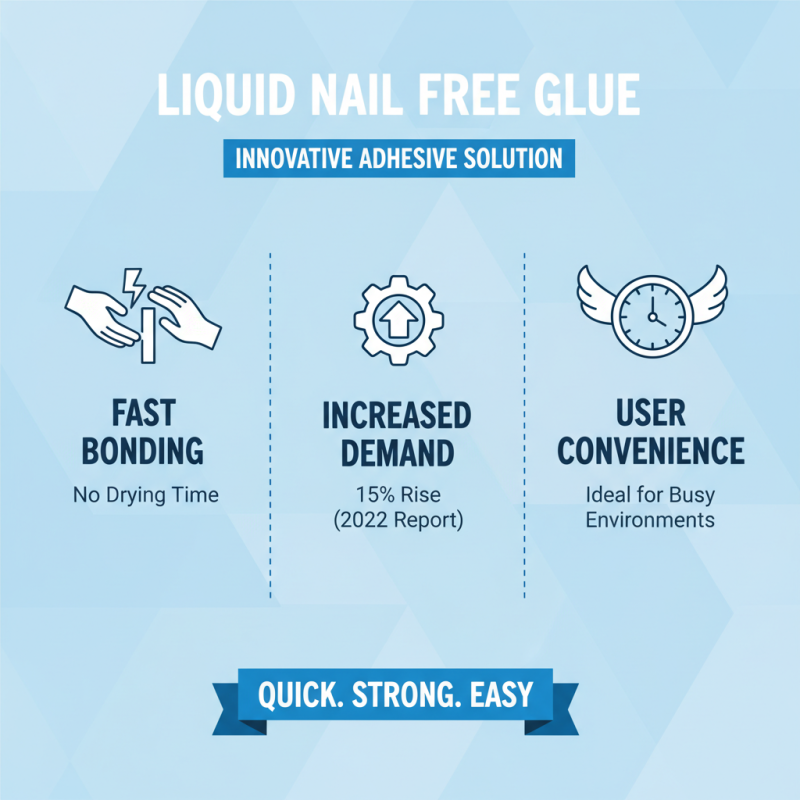
Liquid Nail Free Glue is an innovative solution that offers several advantages over traditional adhesives. This glue utilizes a unique formulation that allows for quick bonding without the need for drying time typical of standard adhesives. According to a 2022 report by the Adhesive and Sealant Council, the demand for fast-setting adhesives has increased by 15% in the past five years. Users appreciate the convenience, especially in busy environments.
In comparison, traditional adhesives often require curing time. Their reliance on solvents can lead to extended project timelines. Liquid Nail Free Glue, conversely, can create a strong bond almost instantly. However, not every scenario is perfect. Some users report challenges in initial application, such as ensuring even coverage. Furthermore, while these glues perform well, they may struggle in extreme conditions.
A 2021 study published in the Journal of Adhesive Science highlighted that over 40% of users encountered issues like insufficient strength in wet or high-temperature environments with conventional adhesives. Users must evaluate specific needs when choosing adhesive types. Liquid Nail Free Glue has shown promise, but it’s important to consider these factors in different applications.
Environmental Impact and Safety Considerations of Liquid Nail Free Glue
Liquid Nail Free Glue is increasingly popular due to its versatility. However, its environmental impact and safety concerns must be addressed. Many consumers are unaware of the chemicals involved in these adhesives. Some components can be harmful both to humans and the ecosystem.
The production of Liquid Nail Free Glue may involve substances that contribute to pollution. When disposed of improperly, residual glue can contaminate soil and waterways. Thus, it's essential to consider how we use and discard these products. Choosing non-toxic or environmentally friendly options becomes crucial for responsible consumption.
Safety is also a key concern. Some individuals experience allergic reactions to certain glue ingredients. Proper ventilation is essential during application to avoid inhaling fumes. Labels should be carefully read to understand all included chemicals. Awareness and caution can help mitigate potential risks and protect health.