What is Clear Liquid Nails and How to Use It Effectively?
In the realm of construction and home improvement, the adhesive you choose can make or break your project's success. One such adhesive gaining attention is Clear Liquid Nails, a powerful product known for its versatility and strong bonding capabilities. According to a recent industry report by the Adhesive and Sealant Council, the demand for construction adhesives, specifically products like Clear Liquid Nails, has seen a substantial increase of approximately 15% in the past year alone, driven by a surge in residential and commercial renovation projects.
Industry expert John Thompson, a renowned adhesive specialist, emphasizes the importance of understanding how to use these products effectively. He asserts, "The proper application of adhesives such as Clear Liquid Nails ensures not only a sturdy bond but also enhances the durability of your installations." This claim is supported by numerous case studies demonstrating the long-lasting bonds formed with Clear Liquid Nails under various environmental conditions, making it a preferred choice for both DIY enthusiasts and professionals alike.
As we delve deeper into the nuances of Clear Liquid Nails, it is essential to explore its properties, benefits, and best practices for application to ensure optimal results in your projects. Understanding this adhesive’s strengths and limitations can empower users, ensuring they make informed decisions in their construction endeavors.
What is Clear Liquid Nails and Its Key Properties?
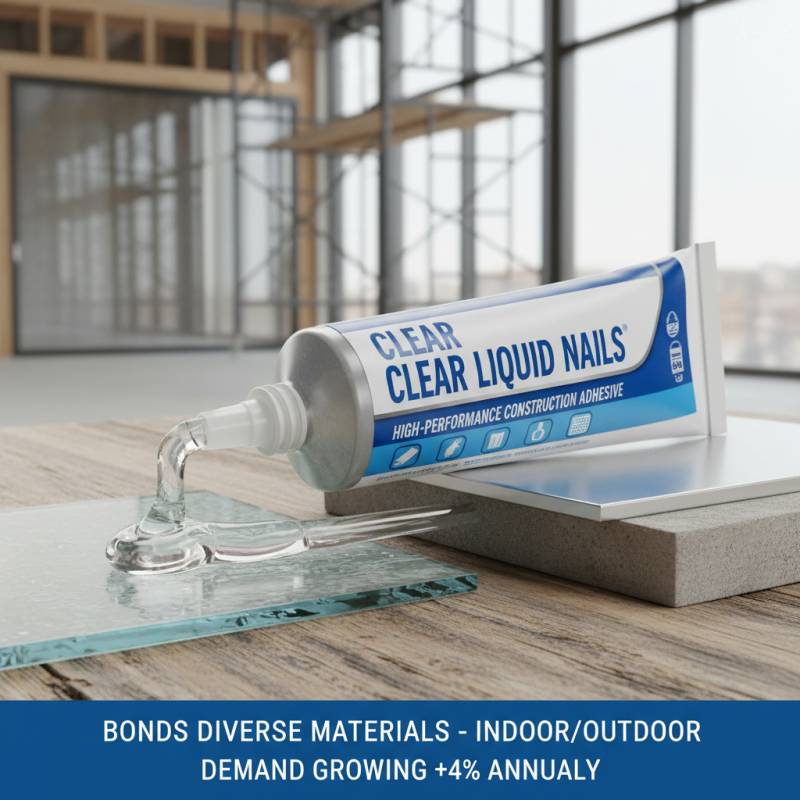
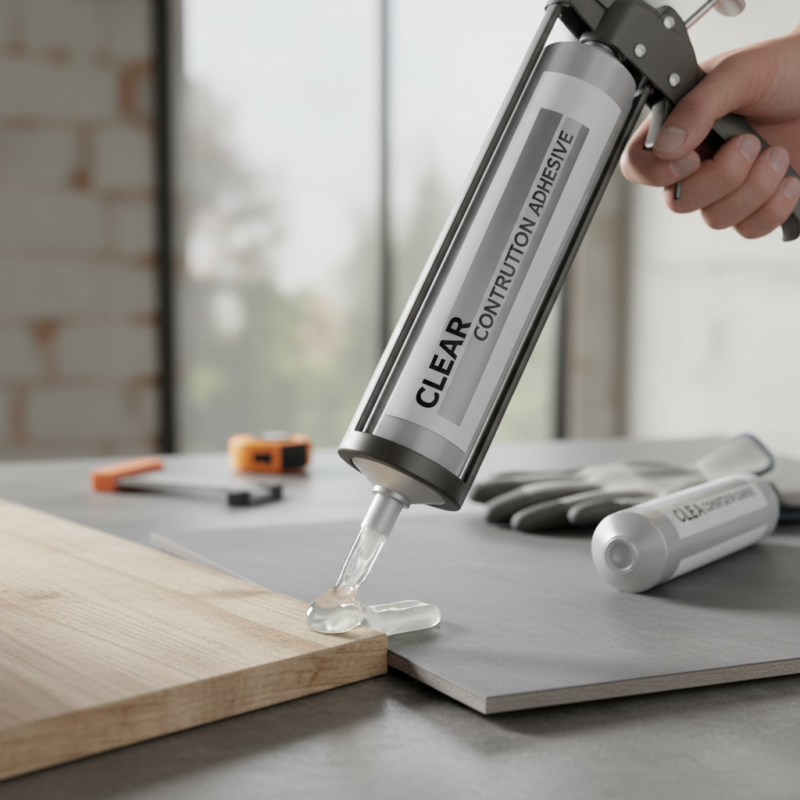
Clear Liquid Nails is a high-performance construction adhesive designed for bonding various materials, including wood, metal, ceramic, and glass. Its formulation allows it to provide exceptional strength and durability, making it suitable for both indoor and outdoor applications. One of the key properties of Clear Liquid Nails is its versatility; it can effectively bond dissimilar materials, which is crucial in projects where multiple substrates are present. According to a report by the Adhesive and Sealant Council, the demand for construction adhesives, such as Clear Liquid Nails, is expected to grow by over 4% annually, reflecting the ongoing need for reliable bonding solutions in the construction and DIY industries.
Another notable aspect of Clear Liquid Nails is its clear finish, which allows for seamless integration in visible applications without marring the aesthetic of the surfaces being bonded. This is particularly advantageous in home improvement projects where the appearance is as crucial as the integrity of the bond. Furthermore, the adhesive is formulated to resist water and humidity, ensuring longevity and maintaining bond strength under varying environmental conditions. Industry studies show that adhesives with similar properties have a performance rating exceeding 90% in terms of water resistance, underscoring the importance of selecting a high-quality adhesive for reliable results in construction and repair tasks.
Applications of Clear Liquid Nails in Construction and DIY Projects
Clear Liquid Nails are a versatile adhesive widely used in various construction and DIY projects. Their formulation allows for excellent bonding across different surfaces, making them suitable for both indoor and outdoor applications. According to a market research report by Technavio, the construction adhesive market is projected to grow by 4% annually, highlighting the increasing reliance on high-performance adhesives like Clear Liquid Nails in the industry.
In construction, Clear Liquid Nails are commonly used for attaching paneling, drywall, and other building materials due to their strong initial tack and long-lasting hold. The product can bond wood, metal, and even some plastics, which significantly broadens its application. A study published by the Adhesive and Sealant Council points out that the construction sector accounts for approximately 45% of all adhesive usage, underlining the importance of products like Clear Liquid Nails that enhance project efficiency and structural integrity.
In DIY projects, these adhesives are favored for their ease of use and quick drying times. Homeowners often utilize Clear Liquid Nails for tasks such as fixing furniture, bonding tiles, or securing decorative elements. Industry surveys indicate that nearly 60% of DIY enthusiasts prefer using adhesive products that offer strong, reliable bonding solutions, further cementing the role of Clear Liquid Nails in everyday tasks. The ability to apply it in both vertical and horizontal planes makes it an indispensable tool in the DIY toolkit.
Usage of Clear Liquid Nails in Different Applications
Step-by-Step Guide on How to Apply Clear Liquid Nails Correctly
To effectively apply clear liquid nails, start by preparing both the surfaces you intend to bond. Ensure that they are clean, dry, and free from dust or grease. This will promote a stronger adhesive bond. It's often helpful to roughen up the surfaces slightly using sandpaper, especially for non-porous materials, as this can enhance adhesion.
Next, apply the clear liquid nails using a caulking gun, squeezing out a consistent bead along the intended bonding area. It's important to work in small sections, as the adhesive can set quickly. For larger items or surfaces, consider applying the adhesive to both pieces for optimal results. Once you’ve aligned the surfaces, press them firmly together, ensuring there are no air pockets. Additional clamps or weights can be used to maintain pressure while the adhesive cures, which usually takes at least 24 hours for maximum strength. Following these steps will help achieve a strong, lasting bond with clear liquid nails.
Safety Precautions and Common Mistakes to Avoid with Clear Liquid Nails
When using Clear Liquid Nails, adhering to safety precautions is paramount to ensure a smooth application and prevent health hazards. According to data from the Occupational Safety and Health Administration (OSHA), certain adhesives, including construction adhesives, can release volatile organic compounds (VOCs) that may cause respiratory issues or skin irritations.
Therefore, it is essential to work in a well-ventilated area and to wear appropriate personal protective equipment, such as gloves and masks, to minimize exposure. Ensuring proper ventilation can significantly reduce the concentration of harmful fumes and create a safer working environment.
In addition to safety measures, avoiding common mistakes during application can enhance effectiveness. One prevalent error is overapplying the adhesive, which can lead to unnecessary mess and prolonged curing times. Research indicates that using the recommended amount, typically around a quarter-sized bead, can yield superior bonding strength without compromising the aesthetics of the project.
Another common mistake involves premature stress on the bond before it has fully cured; it is advised to allow adequate drying time as specified by the manufacturer, which can range from 24 to 72 hours depending on conditions. Paying attention to these details can not only improve the quality of the bond but also ensure longevity and durability in your projects.
Comparative Analysis: Clear Liquid Nails vs. Other Adhesives on the Market
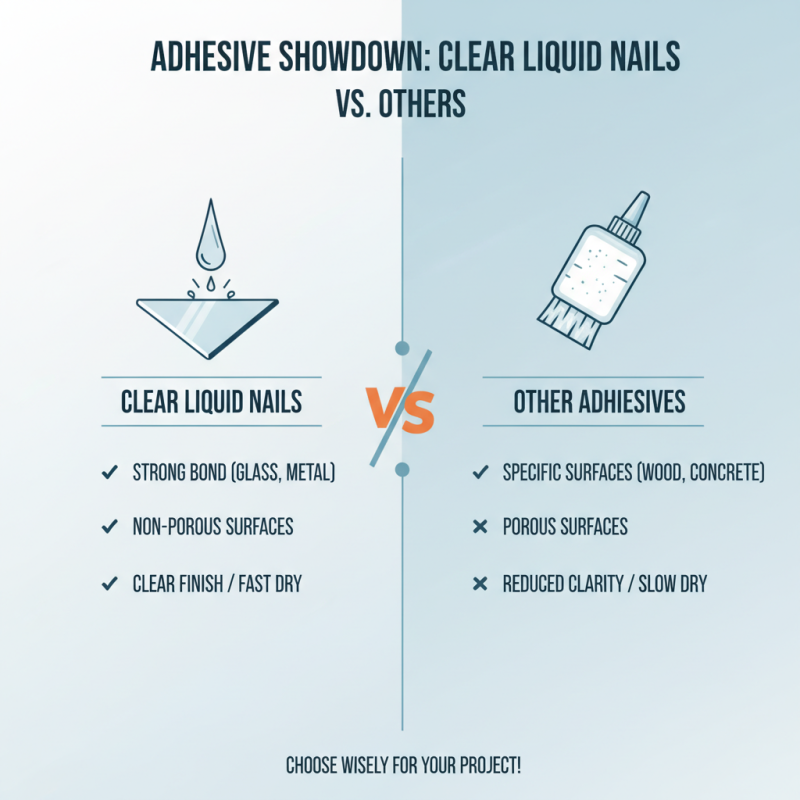
When comparing Clear Liquid Nails to other adhesive options available in the market, it becomes crucial to evaluate their specific characteristics, strengths, and ideal applications. Clear Liquid Nails is known for its strong bonding capabilities, especially on non-porous surfaces like glass and metal. This versatility makes it a preferred choice for projects requiring clear finishes. In contrast, other adhesives might excel in specific areas but often come with limitations, such as reduced clarity or longer drying times.
Another significant factor to consider is the curing time and ease of application. Clear Liquid Nails typically offers a fast initial grab, allowing for quicker project completion compared to some alternatives that require prolonged clamping or curing. This efficiency can be particularly advantageous in time-sensitive applications. Additionally, the formulation of Clear Liquid Nails helps to resist temperature fluctuations and moisture, providing an edge over traditional glues that may falter under such conditions. Overall, while each adhesive has its unique attributes, Clear Liquid Nails stands out for its clarity, versatility, and reliability in challenging environments.